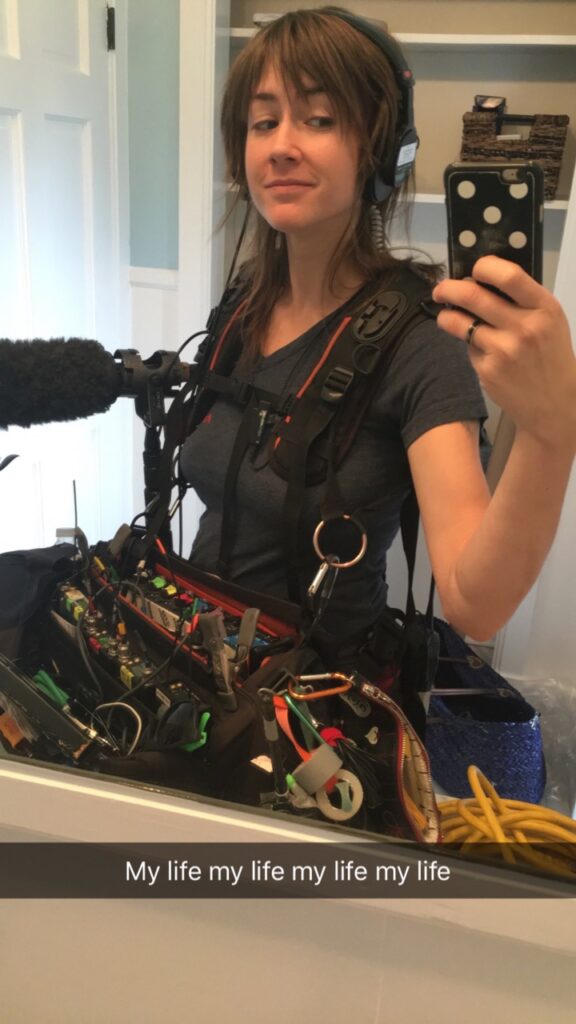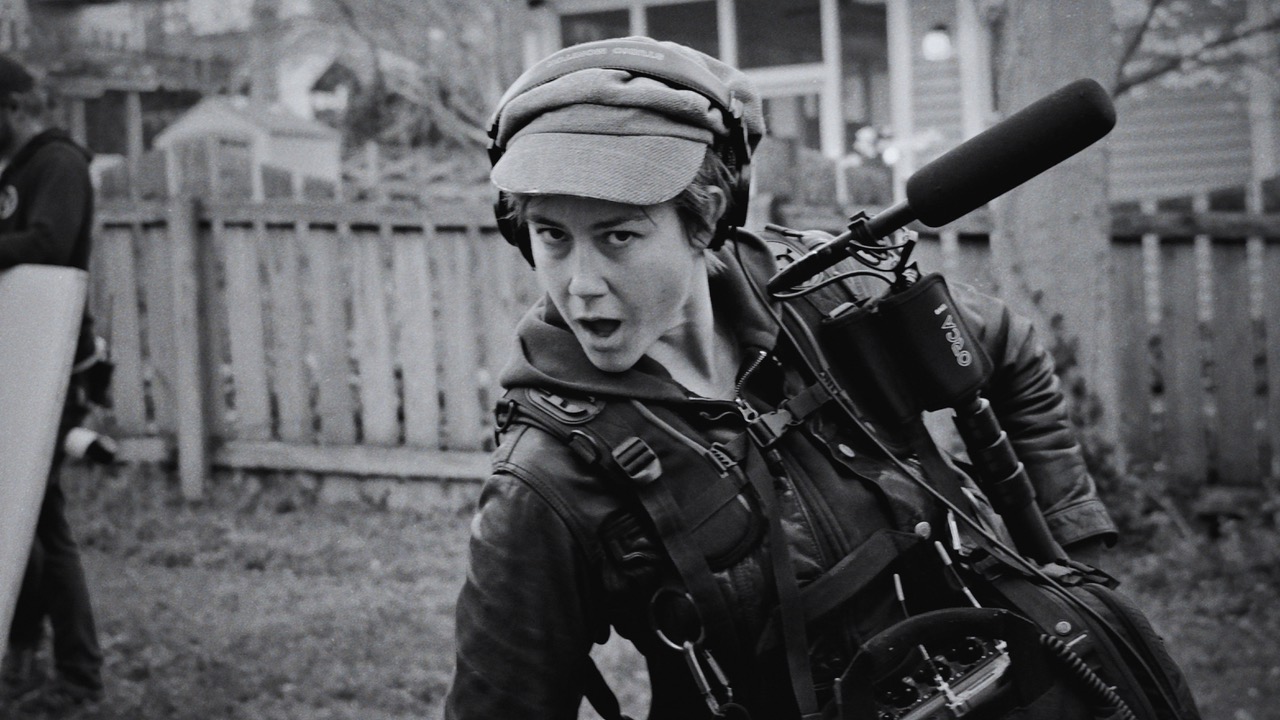
From piano prodigy to touring musician and seasoned audio engineer, Hannah Fairlight has carved out a career that harmonizes creativity and technical mastery. In this inspiring personal essay, she reflects on her journey from small-town Iowa to New York City and beyond, balancing the worlds of music, film, and sound production. In Tune and In Focus: A Life in Music and Audio captures how passion, persistence, and curiosity can lead to a life that’s anything but one-dimensional.
How did I get here?
I always knew I wanted to do something important and grand. As far back as my earliest memories, I had already started looking for my “what.” Olympic gymnast. Marine biologist. The next Jacques Cousteau. My older brother gravitated toward drawing and was naturally very good at it. I was a mediocre artist. I needed “my thing.” I searched. I tried things. I dreamed. I plotted.
When my family rented an upright piano when I was around 5 or 6, “my thing” arrived. I began to play for hours day and night, hungry for more. I started learning the melodies of songs by ear, believing I had unlocked some magical power from within. I would avidly listen to my dad’s record collection and work to translate the melodies to the keys. I would also make up my own little songs. Happy, sad, excited, neutral, driven, complacent… they all pointed me toward the keyboard.
Through all my school years, my busy, activity-packed days were punctuated by lengthy sessions at the piano bench. I wrote my first true songs around 11 years old, an obsession that continued through high school. I chased ideas. I memorized a thousand melodies. I used a tape recorder to bottle my concoctions and filled countless notebooks with lyrics and poems. Meanwhile, I started experimenting with our family’s camcorder. While my schoolmates were out “partying” or cruising or cow tipping or doing other things that small-town Iowa teens do, my friends and I were making music and stop-motion videos.
I believe it was in this fog of youthful creativity that my love for recording emerged.

Capturing song ideas or made-up news shows or workout videos or arty music videos was like chasing butterflies, and I couldn’t bear to let any of them get away. I was spellbound by the magic of ideas coming in, and the urgency to capture them before they flitted away.
When it came time to worry about what I would study at college, I shied away from choosing music. I had taken classical lessons for a decade and did not want to ruin my love and wonder of music with stuffy technical instruction.
But that recording seed had already taken root within me, and I thought… film school. I could study media; the creation of videos and films. I could edit. I could record things. Maybe be a camera person.
I shot from the hip and applied to ten film schools while on a year-long foreign exchange in Peru, during what would have been my senior year of high school.
I shot from the hip again when I was accepted to NYU’s Tisch School of the Arts and decided to go. No consultation with my parents first. (Several long-distance phone calls with my high school guidance counselor first.)
I arrived in New York City at 18, brimming with a magnitude of possibilities I cannot even put into words. I had no idea what I wanted to do IN film and television, but I had the intention of figuring that out along the way.

As I rubbed shoulders with peers from art schools across the country and the world, I felt my lack of direction deeply. They all seemed to know EXACTLY what they wanted to be; many the next Quentin Tarantino or Woody Allen. I tried camera, assistant camera, screenwriting, and directing… and with each passing project and class, I felt something like an imposter — the pang of an inferiority complex. Something wasn’t connecting.
Was I in the wrong place? I battled big creative ideas and the pressure to translate them to professors and peers with top-notch technology at my fingertips at a prestigious (and UBER-expensive) school.
Then, a magical and unexpected thing happened in my second year. I signed up for a class called “Location Sound.” I will openly admit that I did not know what this even meant at the time. But the word “sound” sounded like recording and microphones, so that was good enough for me.
The class took place in a large, dark, warehouse of a room — part sound stage, part prop and equipment storage, with mini sets that looked like house facades or rooms.
The professor was Chat Gunter, a wiry, zany, seasoned sound recordist, whose character matched his name. He shared exciting stories of miking up this famous person or that, on this famous film or that. He joked, he bantered, he opined. His dynamic personality drew me in and made recording dialogue on a film set sound like a bank heist or perilous pirate escape. It felt magical and high stakes. I was enticed, and we hadn’t even gotten to the technical stuff yet.
He DID teach us the technical stuff — how a microphone works, different mic patterns, signal flow, etc. But the thing that captivated my interest most was the “HOW” to be a sound person part, which we spent much more time on. The dance with the boom pole in and out of a camera and the talent. The secretive mic placement. The resourcefulness and creativity of using what you have and still getting good results. The dynamism of working with a crew, of production, of making something lasting. PERSONALITY rather than technical prowess.
*Big takeaway* — you can be the most technically proficient person in the field, but if you’re not easy and fun to work with, you won’t get hired.
Eventually, we were put to the test. We were each sent out with a Fostex PD-4 3-channel DAT recorder/mixer, a couple of hard-wire mics and lavs, and a boom, and we were to go volunteer ourselves as mixers to our peers’ short films. We then brought copies of our tapes back for class credit.
Call it perfectionism, competitiveness, or just an extra enthusiasm and drive I’ve had all my life, I wasn’t about to stop at just a few student films for practice and class credit. I made it my mission to become the “IT” girl for audio. I wanted to mix and record on as many undergrad and grad student films as I could GET my hands on.
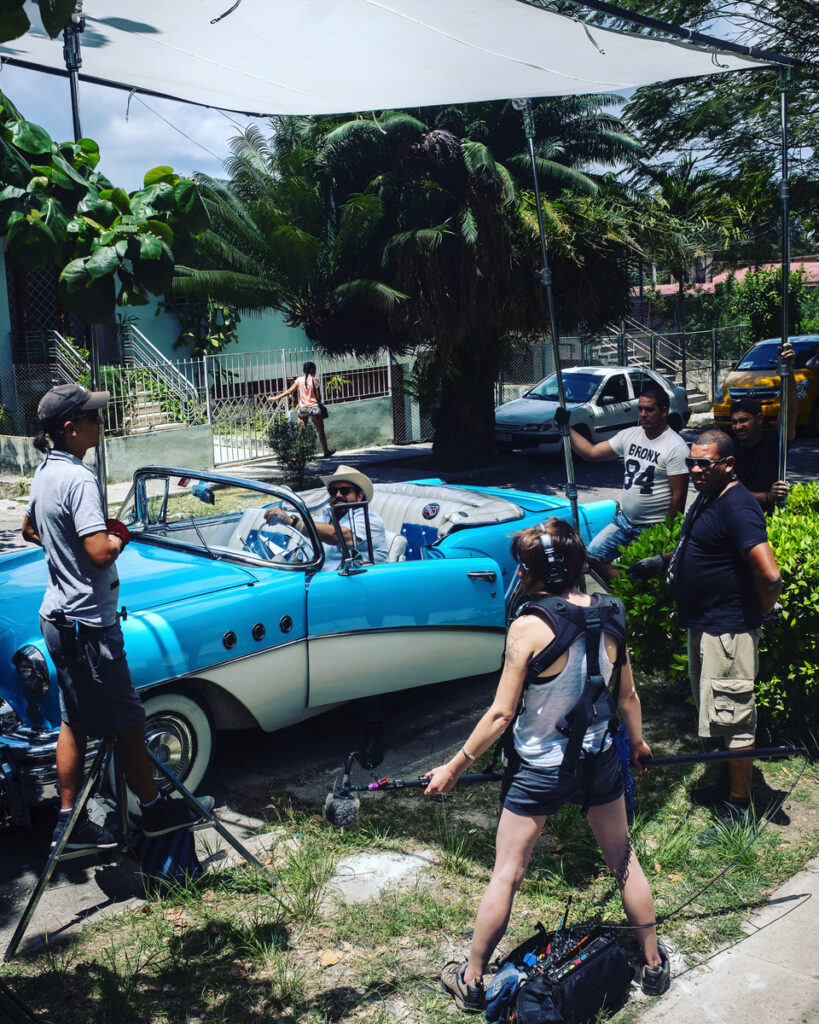
Amidst all the colorful and all-hours productions I was now a part of, one more pivotal thing happened in that class: we took a field trip to a business up by Times Square called Gotham Sound.
The thing that struck me about Gotham was the same thing that struck me about Chat’s sound class: there were lots of young people there, and everyone seemed to be having a great time. It didn’t feel stiff or corporate or anything close. It felt vibrant and exciting. And it was just an audio equipment sales and rental company! The vibe was tangible. And it stuck with me. The audio department was striking me more and more like some secret fun (somewhat nerdy) club.
Perhaps, just maybe… I had found my place.
The cascade of productions and other classes fell. My time in Chat’s class came to a close.
I was playing music gigs around NYC pretty regularly at this point and fell into an opportunity to audition and sign with a band.
I came to a jumping-off point — there was no way I could do school and the band full-time. I had to make an extremely hard decision to take a leave of absence from school to pursue the band.
BUT! With a catch!
The band wasn’t paying much in the beginning, so I needed a day job, at least until we got signed (ha ha).
I had tried my hand at waitressing in the city, to very mixed return. But I remembered one place where the vibe was cool, and I could still stay close to the industry and recording: Gotham Sound.
I went there straight away and applied for a job. At the ripe old age of 20, and a full-time member of a touring band to boot, they hired me! I will be forever grateful that they did.
I credit most of what I learned about sound to Gotham. I learned all the older and current field mixers and recorders inside and out while working there as a rentals technician. I eventually graduated into building gear packages to be sent out on all kinds of productions — from indie films to TV shows and major motion pictures. I learned signal flow and how to build cables, and how to use, store, and quality check equipment. I learned about speakers and EQ, and wireless technology, which was just becoming a thing at the time. I also got to meet hundreds of location sound mixers, which prepared me for my next steps of going out into the field myself as an independent contractor.
After a year full-time at Gotham, I was ready to test my wings. I cut my teeth doing audio on a reality TV show called Love and Hip Hop, which I went on to work several seasons of in both NYC and Atlanta.
My band didn’t get signed, and eventually broke up. (We were an all-girl power pop rock band called Girls Don’t Cry for anyone interested in digging.)
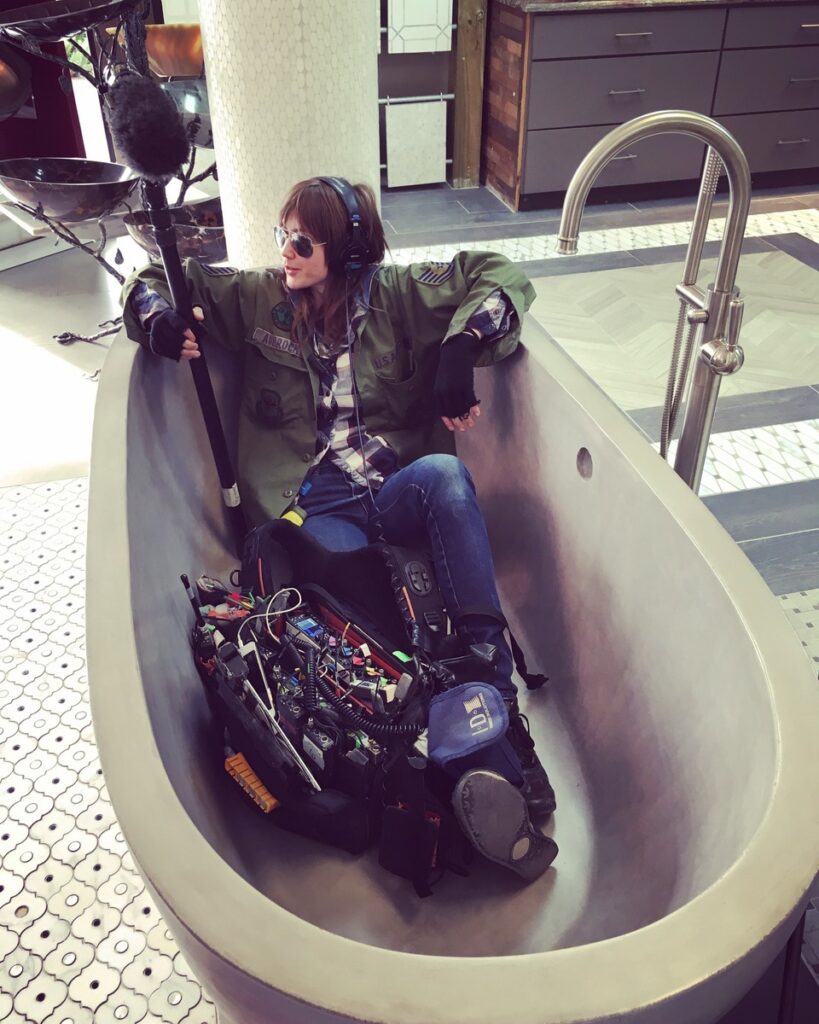
I waitressed and did audio. I played music gigs and did audio. I did a program with the BBC in London, and came back and did audio. I re-entered NYU, now with a renewed focus on broadcast documentary and anthropology, and continued doing audio. I again made myself the “IT” girl on the post-production floor of Tisch, where I engineered Foley, ADR, and music recording sessions for undergrad and grad students. I had the keys to the kingdom, and I didn’t take them lightly.
I loved learning all facets of post-production audio, but ultimately knew my heart was better suited to being in the field vs. in a dark room in front of a computer.
I moved to Sydney, Australia, for two years, where I ultimately worked for a TV Network called Network TEN. When I moved back to the States, I jumped right back into my NYC network and continued doing audio.
What I would do without my NYU and Gotham networks, I do not know. They were my lifeline then, and still are in many ways.
I mixed on countless reality TV shows. Eventually, the 6-day 12-hr/day weeks just to make rent and student loan payments started to wear on me living in NYC, and after hearing about a show opportunity in Nashville, TN, I moved there on a whim, with the hope of doing “THIS” much music and only “THIS” much sound. Basically, flipping the script.
That was 12 years ago. I’m happy to report that I not only flipped the script on my music-to-sound work ratio, but I also met my incredible musician husband, with whom I have two beautiful boys. I even starred on a TV show and had a role in a major motion picture!
And I still do audio.
Since moving to Nashville, I have been able to immensely diversify the kinds of projects I work on, to include many more documentaries and productions that align more with my values. I was able to break out of the reality TV lane I was in for a decade and do more storytelling that satiates my soul. I also get to work on more music. It is Music City after all. 🙂
And I still do audio.
Fifteen or so years ago, after doing it for a few years, I wondered… am I REALLY an audio engineer though? Aren’t I a musician? Just because I proved I COULD do it, in a male-dominated industry, as a young 20-something, didn’t mean I SHOULD.
But I kept getting calls for work, and I kept answering them. And I made a decision then that I have never regretted since:
I guess I’ll just have to do BOTH.
Sincerely,
Hannah Fairlight
Musician, Actress, and AUDIO GIRL