

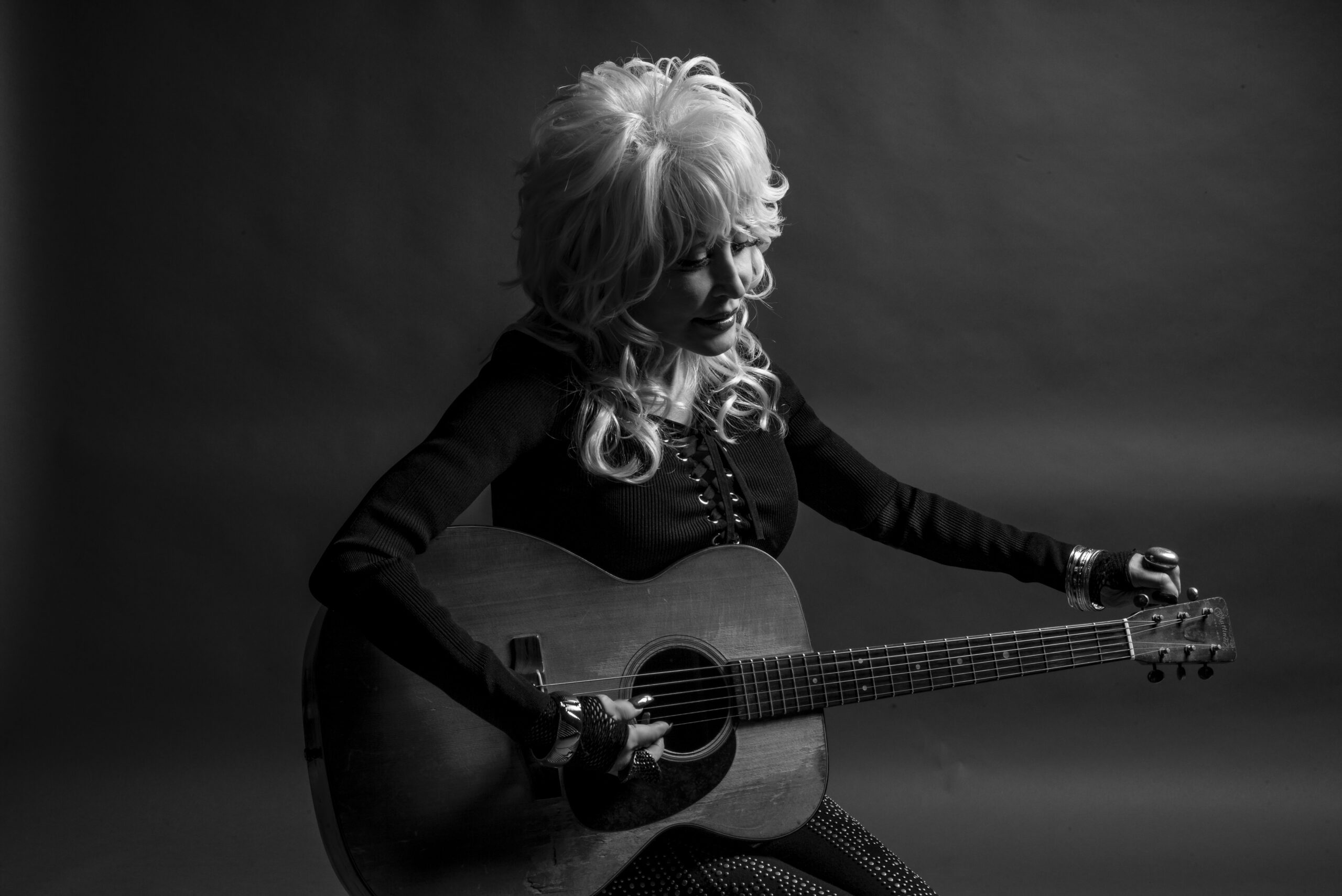
It is hard to imagine country music without Dolly Parton. On August 25, 2026, Dolly Rebecca Parton Dean died at the age of 80 after what her estate described as a brief battle with cancer. She died at Vanderbilt-Ingram Cancer Center in Nashville surrounded by loved ones. Her nephew, Bryan Seaver, first announced her passing on behalf of the Parton and Owens families in a video message Dolly had asked him years ago to deliver when the time came.
There will be plenty written about Dolly in the days ahead: the records she sold, the awards she won, her movies, Dollywood, her philanthropy and, of course, the unmistakable image she created with the big blonde hair, rhinestones and sky-high heels. At Guitar Girl Magazine, however, we keep coming back to the place where so much of it began. Dolly Parton was a songwriter with a guitar and something to say, and over the years, as we’ve interviewed women musicians from virtually every corner of the industry, we’ve heard her name again and again.
It Always Came Back to the Songs
Dolly was born January 19, 1946, in Sevier County, Tennessee, one of 12 children. Her family didn’t have much money, but they had music. She sang and played as a child, performing on local radio and television before she was a teenager. The day after graduating from high school, she headed to Nashville, already knowing that she wanted to make music her life.
The rest of the story is familiar, but sometimes Dolly’s enormous celebrity overshadows what started it all: she could write one hell of a song. “Coat of Many Colors,” “Jolene,” “9 to 5,” “My Tennessee Mountain Home,” “The Seeker,” and “Light of a Clear Blue Morning” barely scratch the surface of a catalog that stretched across decades. She had a gift for writing about very specific experiences—poverty, jealousy, heartbreak, ambition, family—and making the person listening feel as though the song somehow belonged to them, too.
Then there is “I Will Always Love You.” Dolly wrote the song when she decided to leave The Porter Wagoner Show and take control of the next stage of her career. Although millions would eventually come to know it as one of the great romantic ballads, Dolly wrote it as a goodbye to Wagoner, someone she cared about but knew she had to leave professionally if she was going to move forward on her own.
Her decision years later not to give up half of the song’s publishing when Elvis Presley wanted to record it has become part of music-business lore. Dolly wanted Elvis to sing her song, but the publishing demand was a dealbreaker. It must have been an excruciating decision—this was Elvis, after all—but she understood the value of what she had written and held on to it. When Whitney Houston’s version became a worldwide phenomenon years later, Dolly still owned her song.
For all the jokes Dolly made about herself—and she was usually quick enough to make them before anyone else could—behind the rhinestones was an exceptionally savvy woman who understood songwriting, publishing, and the business surrounding her music. At a time when women had far less power in the Nashville music industry than they do today, she learned how to protect the work she created and built a business empire around it.
She Never Had to Stop Being Dolly
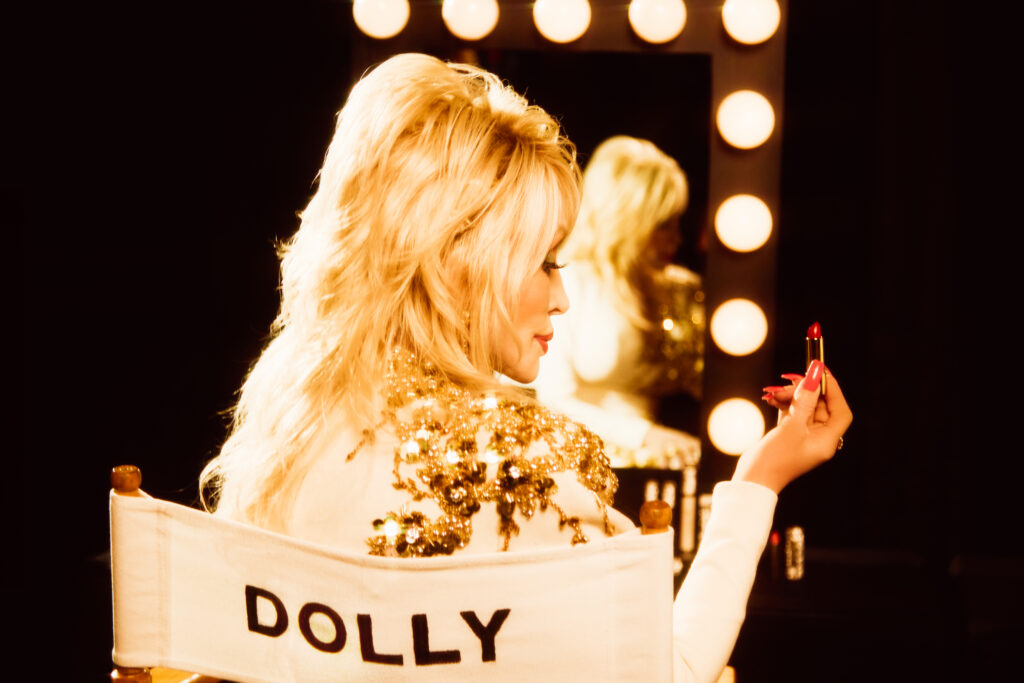
Dolly also demonstrated something important to women who came after her: being taken seriously didn’t require becoming someone else’s idea of what a serious artist should look like. She didn’t trade the blonde hair, long fingernails and rhinestones for a more subdued songwriter image as her career grew. She didn’t apologize for being feminine, funny or a little over the top. She could walk onto a stage looking exactly the way she wanted, pick up a guitar and remind everyone that underneath all of it was the woman who had written the song.
That combination fascinated some of the musicians we’ve interviewed through the years. Singer-songwriter Manda Mosher told Guitar Girl Magazine in 2020 that as a child she remembered seeing Dolly on television, admiring her clothes and wondering how in the world she managed to play guitar with those famous fingernails. As Mosher grew older, she came to appreciate much more about Dolly—the heartfelt songs, positivity, humor, and determination behind the image. When she encounters obstacles in her own career, Mosher told us, she sometimes finds herself asking, “What would Dolly do?”
It’s a small anecdote, but it says a great deal about the kind of influence Dolly had. Artists didn’t simply admire her records or want to sound like her. They paid attention to the way she conducted her career.
We Kept Hearing Her Name
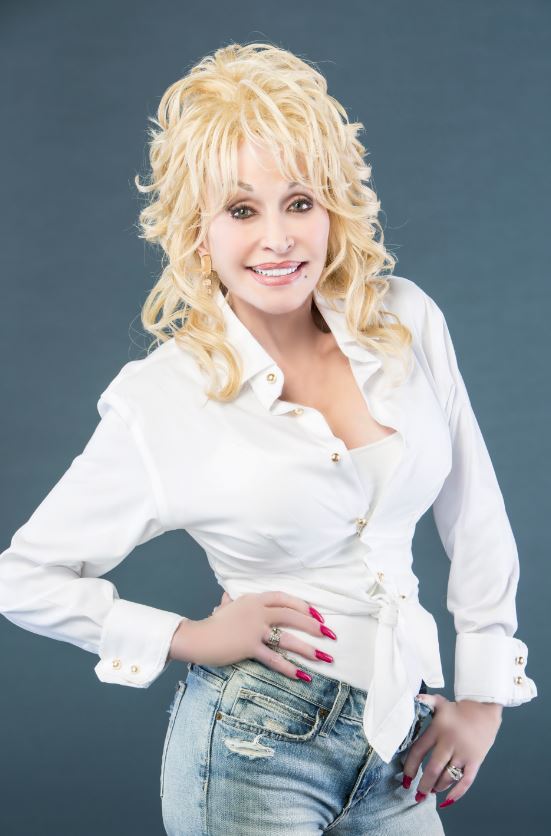
After the news of Dolly’s passing, we looked back through years of Guitar Girl Magazine interviews. We knew her name had come up frequently over the years, but seeing those conversations together reminded us just how far her influence reached.
When we interviewed Rissi Palmer in 2015 and asked about her early musical inspirations, she talked about being drawn to songwriters who both sang and played, naming Dolly alongside Bonnie Raitt, James Taylor, India.Arie, Phoebe Snow, and Patty Griffin. These weren’t simply favorite singers; they were musicians Palmer said she studied.
In a 2019 interview, Alice Wallace also placed Dolly among the women who had most influenced her career, along with Dolly’s Trio collaborators Linda Ronstadt and Emmylou Harri, as well as Jewel and Patti Griffin. Wallace’s admiration extended beyond their voices and songs to what they contributed to American music and the examples they set as women navigating the business, saying, “They are all incredible talents and strong business women who have contributed so much to the catalog of American music.”
For Jordana Bryant, Dolly represented something especially meaningful to a young woman building a career in country music. In a 2022 interview, she told us she was grateful for women such as Dolly and Reba McEntire who had come before her and helped make the road a little easier for the girls following behind, sharing, “I feel really grateful for women like Dolly Parton and Reba McEntire, who came before me and truly paved the way for women in country music.”
Mags had an even more personal connection. We met her at CMA Fest in 2018, and she shared that growing up in Ireland, she listened to Dolly, Patsy Cline, and Johnny Cash. In 2007, she had the opportunity to meet Dolly and perform with her at Dollywood, and that experience still clearly mattered. She remembered Dolly giving her the courage to keep going and never give up.
Other stories in our archives reach back to childhood. Jada Vance remembered receiving her first Dolly Parton cassette when she was only six or eight years old. Cherokee Fortune told us the first album she ever owned was Dolly’s Here You Come Again. Rhyan Sinclair recalled immersing herself in Dolly’s music and searching out the Trio album on vinyl. Grace Humphries, Kelly Monrow, Jenna Torres, Myra Washington, Brei Carter and other artists we’ve spoken with have also named Dolly among the musicians who shaped or inspired them.
Caroline Jones saw Dolly’s influence from a vantage point few people ever experience. As a member of Zac Brown Band, Jones was onstage backing Dolly during her Rock & Roll Hall of Fame induction in 2022. She watched Dolly rehearse and interact with artists including P!nk, Brandi Carlile, Pat Benatar, Annie Lennox, Bruce Springsteen, and John Mellencamp. When Jones later talked with Guitar Girl Magazine in 2023 about the experience, what stayed with her was watching great artists be completely themselves. “You could really see the humanity and the friendship in Dolly and her collaborators,” she said. “It’s so cool to see them do their thing and be singularly who they are, and nobody exemplifies that more than Dolly Parton.”
Taken together, those interviews tell a story that statistics about record sales and awards can’t. Dolly’s influence wasn’t confined to one generation, and it wasn’t confined to artists who sounded like her. Women who came to music at different times and from different backgrounds found something in Dolly that spoke to the kind of artist they wanted to become.
A Guitar Was There From the Beginning
Dolly’s relationship with the guitar went back to childhood. Before the elaborate stage shows, television specials, and international fame, there was a little girl in East Tennessee learning to make music and discovering that a guitar could turn what she saw and felt into songs.
That part of her story naturally resonates with us at Guitar Girl Magazine. Our mission has always centered on celebrating and encouraging women who play guitar and make music, and Dolly was living that story decades before this magazine existed. She also showed that being a woman with a guitar didn’t have to fit into any one category. Her career moved through country, pop, bluegrass, gospel and eventually rock, while songwriting remained at the center of it.
When Dolly was nominated for the Rock & Roll Hall of Fame in 2022, she initially tried to withdraw her name because she didn’t believe she had earned the honor as a country artist. She was inducted anyway, and her response was wonderfully characteristic: if she was going into the Rock Hall, she decided she needed to make a rock album. Rockstar, released in 2023, arrived when Dolly was 77 and featured collaborations with artists from across the musical spectrum. She could easily have spent that stage of her career celebrating everything she had already accomplished. Instead, she found another reason to make music.
She Opened the Door and Left It Open
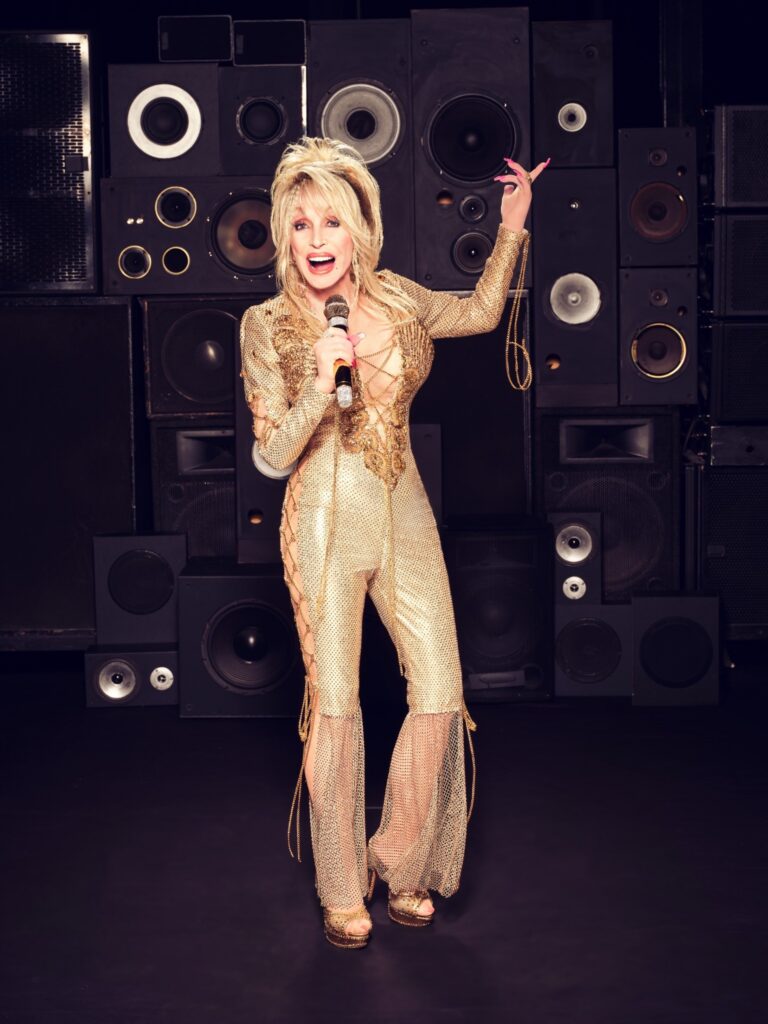
In announcing his aunt’s death, Bryan Seaver spoke about Dolly opening doors not only for her family, but for generations of singers, songwriters, musicians and dreamers. Looking through our own interview archives, it is difficult to disagree.
Some of the women we’ve interviewed grew up with Dolly’s records. Others studied her songwriting or admired the way she handled the business side of her career. Some saw her as evidence that a woman could survive and thrive in an industry that wasn’t always eager to hand women the reins. A few were fortunate enough to share a stage with her. Different generations took different lessons from Dolly, but she made the possibilities seem a little broader for the women coming behind her.
She used her success to create opportunities outside of music as well. Dolly launched the Imagination Library in 1995, with the program beginning book distribution in 1996, as a literacy program for children in her home county in East Tennessee, inspired by her father, who could not read or write. It eventually grew far beyond Tennessee, putting hundreds of millions of books into the hands of children. Her philanthropy also reached education, health care, disaster relief and other causes, often without making Dolly herself the center of the story.
Thanks for Opening the Door
Seaver shared one detail in the family’s announcement that sounds exactly like the Dolly the world knew. She had told him she wanted to rest on a beautiful bed of plush cotton because, after a lifetime of wearing heavy rhinestones, she deserved to finally be comfortable.
It is funny and sweet, but also fitting. Dolly spent decades allowing the public to feel as though we knew her. We knew the laugh and the hair, the stories about growing up in the mountains and the jokes about her appearance. We knew about Carl even though he rarely appeared in public. She could make people laugh at one moment and say something unexpectedly insightful the next. Most of all, we knew her through the songs.
Looking through our old interviews this week also reminded us that Dolly’s story isn’t ending with the generation that grew up listening to her. Years from now, young women will still be picking up guitars, discovering “Jolene” or “Coat of Many Colors” for the first time, and learning about the woman who wrote them. We expect we’ll still be interviewing artists who answer “Dolly Parton” when we ask who inspired them.
Her final message to the people who loved her could hardly have been more fitting: “I will always love you.”
We will always love you, too, Dolly. Thanks for the songs, the laughs and, yes, all those rhinestones. But from all the generations of Guitar Girls who followed the path you helped create, most of all, thanks for opening the door.
View this post on Instagram

